Senior Care 101: How to Examine Memory Care Facilities
Business Name: BeeHive Homes of Farmington
Address: 400 N Locke Ave, Farmington, NM 87401
Phone: (505) 591-7900
BeeHive Homes of Farmington
Beehive Homes of Farmington assisted living care is ideal for those who value their independence but require help with some of the activities of daily living. Residents enjoy 24-hour support, private bedrooms with baths, medication monitoring, home-cooked meals, housekeeping and laundry services, social activities and outings, and daily physical and mental exercise opportunities. Beehive Homes memory care services accommodates the growing number of seniors affected by memory loss and dementia. Beehive Homes offers respite (short-term) care for your loved one should the need arise. Whether help is needed after a surgery or illness, for vacation coverage, or just a break from the routine, respite care provides you peace of mind for any length of stay.
400 N Locke Ave, Farmington, NM 87401
Business Hours
Picking a memory care neighborhood is not just a real estate choice, it forms the last chapters of someone's life. Households reach this crossroad for many reasons. A parent has actually started wandering in the evening. A spouse with dementia can no longer be safely lifted after a fall. The primary caregiver is exhausted after months of interrupted sleep. Excellent memory care reduces these strains. It stabilizes safety with autonomy, and scientific oversight with day-to-day happiness. The hard part is discriminating in between sleek marketing and a place that will truly satisfy your loved one's needs.
This guide draws on years of deal with families, nurses, and administrators inside senior care. It concentrates on what to try to find, what to ask, and how to judge trade-offs that seldom appear on shiny brochures.
What memory care is, and what it is not
Memory care is a specialized type of senior care created for people dealing with Alzheimer's illness and other dementias. It is generally housed within an assisted living neighborhood or a freestanding structure. Compared with traditional assisted living, memory care offers secured environments, more personnel training in dementia care, structured everyday routines, and tailored activities that minimize stress and anxiety and confusion.
It is not a healthcare facility, even if there is a nurse on site. Memory care bridges two needs that typically yank in opposite directions: security and normalcy. The very best communities keep people safe without making them feel put behind bars. They support choice making without setting locals approximately fail.
If you are unsure whether it is time, think of risk. Repetitive wandering outside, range fires, frequent falls, weight-loss from missed out on meals, incontinence that overwhelms home resources, and aggressive habits that put somebody at danger, all point towards the requirement for specialized dementia care. Respite care, which is a brief stay in a memory care setting, can help you check the fit and capture your breath without devoting to a long lease. Many families use respite care after a hospitalization or throughout a caregiver's medical leave to see how their loved one reacts to the structure and staff.
The care design under the hood
Every tour will mention person-centered care. What matters is the equipment behind the phrase. The heart of the model is staffing, clinical oversight, and how the group reacts to habits and health changes.
Staffing ratios. There is no single national requirement for memory care staffing, due to the fact that regulations vary by state. Virtually, search for daytime caregiver ratios in the series of 1 to 5 or 1 to 8, depending upon skill, and greater ratios at night, often 1 to 10 or 1 to 15. Ratios alone do not tell the complete story. Ask how staff are released. A ratio of 1 to 6 on paper can feel unsafe if half the team is on break or floating to another system. Great operators schedule predictable breaks and float coverage so homeowners are not left waiting throughout meals and bathing.
Training. Dementia care is not instinctive. Quality communities provide at least 8 to 16 hours of specialized onboarding on dementia communication, redirection strategies, and understanding of various dementias like Lewy body and frontotemporal disease. Ongoing in-services, usually monthly, keep skills fresh. Training needs to include nonpharmacologic techniques to agitation, safe transfers, infection acknowledgment, and how to engage people with aphasia. Ask to see a sample training calendar, not simply a brochure.
Clinical oversight. Memory care is typically overseen by a nurse, often a RN who leads care preparation and supervises medication service technicians. Some buildings likewise host checking out medical care companies, psychiatric nurse practitioners, physical and occupational therapists, and hospice teams. The very best setups consist of weekly or biweekly rounding by a doctor who can adjust medications and catch infections or dehydration early. A nurse who understands the residents will see when a quiet person ends up being quieter, or when a chatty person's words lose focus, and will connect those modifications to possible medical issues.
Medication management. Habits in dementia is typically a kind of interaction. Medications that sedate can peaceful the habits however also strip away movement and cognition. Experienced groups utilize antipsychotics and benzodiazepines with care and track negative effects weekly throughout the very first month. They deal with prescribers to taper, and they trial environmental repairs first. Door camouflage, soothing music before sundown, pain control, bowel routines, and strolling programs can reduce the extremely behaviors that activate medication use.
The environment tells the fact about priorities
Design can either calm or confuse. Walk the corridors slowly and view how homeowners move.
Layout and wayfinding. Memory care systems with loops permit citizens to stroll without dead ends that can trigger disappointment. Short sightlines to dining-room and activity spaces help individuals get involved. Try to find clear, large-print signs, contrasting colors on bathroom limits and toilet seats, and shadow boxes or memory screens by doors that hint space ownership. Individualized entryways show the team worths identity, not just room numbers.
Lighting and sound. Intense, natural light lowers sundowning and improves sleep. Ask whether the community uses circadian lighting or at least prevents severe fluorescent glare. Sound matters. Television volume in common spaces that overwhelms conversation is a red flag. The spaces ought to hum, not roar.
Safety features. Safe and secure courtyards supply safe access to fresh air. Fencing should blend in, not feel punitive. Doors may be alarmed or use code pads. Wander management systems, like discreet bracelets, allow liberty within set zones. Fire security, smoke barriers, and sprinklers should be obvious and code certified. Floors must be matte, not glossy, since glare can appear like water or holes to individuals with dementia-related visual changes.
Privacy and dignity. Look at restrooms. Are they tidy, intense, and equipped with incontinence products in such a way that does not promote a resident's difficulties to every passerby. Are there raise systems or ceiling tracks in spaces where homeowners need two-person transfers. If not, how do staff secure backs and hips, both theirs and homeowners'.
Life between breakfast and bedtime
Programs that look lively at 11 a.m. And dead by 3 p.m. Typically rely too much on a single activities director. Reality needs rhythm. People with dementia do finest with predictable routines, little group engagement, and meaningful tasks.
Activities. Good calendars are not the objective. Involvement is. Try to find mixed activities across the day: baking, garden walks, chair yoga, singalongs, and individually visits for those who avoid groups. Cognitive stimulation can be as simple as arranging nuts and bolts for a retired mechanic or folding towels for a previous housewife who discovered pride in a tidy linen closet. Ask how the group engages individuals who refuse activities or nap all the time. An experienced aide will welcome, not force, and will adapt the task so the person feels successful.
Meals. Food brings convenience. Examine whether meals are served household style or plated. Finger foods help those who deal with utensils. High calorie density matters for individuals who rate. Watch a meal if you can. Do staff sit and cue, or do they hover at a range. Are adaptive cups and plates readily available. Hydration stations with fruit-infused water or tea work, but just if personnel timely sips throughout the day.

Bathing and individual care. Bathing can trigger stress and anxiety. The most efficient method is flexible scheduling and a calm pace. Look for non-slip seating, hand-held shower heads, and warmed towels. Ask how the group analyzes refusal. Is it a tough no, or does somebody try once again later on with a various assistant who has better relationship. The answer exposes whether dignity is practiced or simply preached.
Sleep. Nights can be uneasy for individuals with dementia. Some communities run relaxing late-evening programs, like peaceful music, hand massages, and dimmed lights. Others turn off the lights and expect the very best. If your loved one wanders during the night, ask how they are monitored between midnight and 5 a.m., when staffing is thinnest.
Culture shows up in little moments
You can pick up culture in how personnel greet each other and residents. Do assistants understand the names of family members. Do they laugh with residents without mocking them. Are supervisors noticeable beyond trips and meetings.
Leadership stability matters. High administrator or nurse turnover usually ripples through the structure. A team that has actually interacted for many years anticipates issues before they swell. Ask how long the executive director, nurse leader, and department heads have actually been in location. Brief periods are not immediately bad if the operator is investing in a turnaround, but you ought to penetrate what changed and what is improving.
Communication norms matter too. Memory care is a three-way relationship in between the resident, the memory care farmington nm BeeHive Homes of Farmington group, and the family. Communities that arrange quarterly care plan meetings, return calls the same day, and share small wins develop trust. One neighborhood I worked with sent out a weekly picture and two-sentence upgrade to families. It was simple, yet it reduced anxiety and hospitalizations because relative stayed engaged.
Health integration, hospice, and medical facility use
Dementia care does not take place in a bubble. Residents still get urinary tract infections, pneumonia, heart failure, and fractures. Look for a care design that can react inside the building whenever feasible. Point-of-care lab draws, telehealth with the primary care group, and relationships with mobile x-ray services can cut down on disruptive ER trips.
Hospice and palliative care are not failures. They are tools. A good memory care neighborhood partners with hospice companies and understands when to refer. If your loved one is dropping weight, withdrawing from activities, or experiencing regular infections, palliative discussions can line up care with comfort. Ask where end-of-life care typically occurs. Many people choose to pass away in location, with familiar personnel and household nearby. That takes training, coordination, and a clear plan for symptom management.
Falls happen. What matters is how the community gains from them. Event evaluations should be regular. Was the flooring damp. Were shoes suitable. Did a brand-new medication cause dizziness. Neighborhoods that track patterns can minimize repeat falls without turning to unneeded restraint, which includes chemical restraint.
Cost, agreements, and what the small print hides
Memory care is expensive. In lots of areas, regular monthly base rates range from 5,000 to 10,000 dollars, in some cases higher in major metro areas. Prices designs vary:
- Some communities use all-encompassing pricing, where the base rate covers space, board, and the majority of care.
- Others utilize tiered care levels, adding costs as support requires increase, for example an extra 800 dollars for aid with two-person transfers or incontinence care.
- Medication management can be consisted of or billed per medication pass.
- Respite care is usually billed daily or week at a somewhat greater rate but without a long-lasting commitment.
Ask about annual rate boosts. Common varieties are 3 to 7 percent annually, but inflationary spikes can press greater. Clarify what activates a move to a higher care tier. If your loved one establishes habits that require extra staffing, the monthly costs may climb quickly. Contracts should specify notification periods for leaving, refund policies, and what happens during hospitalizations. Some communities hold the space at complete or partial rate throughout a hospital stay, others allow short-lived holds at a lowered fee.

Insurance seldom spends for space and board. Long-lasting care insurance may reimburse part of the expense if the policy includes memory care. Medicaid coverage for memory care differs by state and is often connected to assisted living waivers. Veterans and making it through spouses may get approved for Help and Attendance benefits. Trusted administrators assist households browse these programs without overpromising.
How to check out quality data without getting misled
Unlike nursing homes, numerous memory care units sit inside assisted living and are not rated by a federal First-class system. Quality oversight depends upon state licensing. You can request state survey reports, which note deficiencies and corrective actions. A shortage is not constantly a deal-breaker. Repeated patterns matter more than a one-time citation for a paperwork lapse. Ombudsman workplaces can share complaint patterns and assist families resolve concerns.
Online reviews capture extremes. Look past star rankings and check out for specifics. Constant themes, like poor interaction or frequent personnel turnover, should have weight. Beware about confidential rants that do not align with what you see throughout a visit.
Touring method that conserves time and reveals truth
Tours set up mid-morning on a weekday are frequently the community's finest foot forward. You should see that version, but likewise its opposite. Visit again during dinner or on a weekend. Listen for how staff react to buzzers, who sits with locals during meals, and whether managers exist or reachable.
Consider utilizing respite look after a week or two if the community offers it. A short stay exposes how your loved one reacts to the environment. You will learn more from 3 bath attempts, 2 meals, and a Sunday afternoon than from any brochure.
Here is a succinct tour-day list to keep you focused:
- Arrive unannounced for a 2nd visit at a various time of day and watch a meal.
- Ask 3 direct-care aides the length of time they have actually worked there and what training they get.
- Request to see the activity in a small group room, not simply the centerpiece in the lobby.
- Review the last state survey and ask what altered in response.
- Walk the courtyard and inspect whether exits are safe but still feel humane.
Red flags you must not ignore
- Strong urine or fecal smells that stick around beyond a specific event, which frequently signals persistent understaffing or poor infection control.
- Residents parked in wheelchairs along corridors with no engagement for long stretches.
- Staff who discuss residents in front of them as if they are not there.
- Confused medication practices, like unsecured med carts or hurried passes with regular errors.
- Leadership that can not articulate staffing ratios, training hours, or how they handle intensifying behaviors.
Family participation and the rhythm of care planning
Families know histories that do not constantly fit into medical charts. The biography of a former teacher who calms when provided reading material, or the Army veteran who responds to structure and clear directions, can change daily results. Bring that knowledge. Lots of neighborhoods utilize a life story type. Exceed preferred foods. List topics that activate anxiety, spiritual preferences, music that soothes, and past routines. If mornings were constantly slow, pressing a 7 a.m. Shower might backfire.
Expect a care plan within 1 month of move-in, then at least quarterly or after any substantial modification. These conferences ought to move from problems to practical actions. If weight is down 5 pounds, who will cue 2nd assistings. If aggression happens throughout bathing, what time of day and which staff member yields much better outcomes. After the meeting, verify the strategy in composing so move changes and new hires do not eliminate progress.
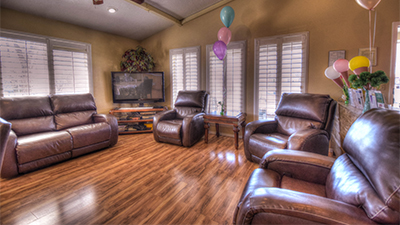
Communication should be two-way. Neighborhoods that share little victories develop trust, and households that share upcoming medical appointments or take a trip strategies help the team strategy staffing and engagement.
Moving day, guilt, and what a soft landing looks like
The hardest part is in some cases psychological, not logistical. Families typically carry guilt, even when home care is unsafe. It assists to frame the relocation as a continuation of care, not a surrender of it.
Preparation smooths the landing. Bring familiar items that hint identity, like a preferred chair, quilt, or wall pictures placed at eye level. Prevent clutter that puzzles navigation. Label clothing clearly. If your loved one always kept a watch on the left-nightstand, location it there. Regimens matter on the first day. If coffee at 9 a.m. Was sacred, inform the team.
Expect a wobble. Many residents are more baffled or upset for the very first one to 2 weeks. Good groups increase individually time during this window, schedule reassuring check-ins, and decrease huge group needs. You can help by visiting sometimes that line up with calm periods, not during bathing or shift change. If the person asks to go home, prevent arguing realities. Verify the feeling and redirect to something concrete, like a walk in the yard or an image album.
Respite care as a bridge and a barometer
Short stays serve numerous purposes. They give caretakers time to recover, and they supply data. If your loved one requires more triggering than the building can provide even during respite, it may signal that the environment or staffing level is not adequate. Alternatively, if sleep enhances and roaming reduces, the structured routine might be working. Use respite care to observe details, like how the group handles incontinence and whether skin stays intact. Request for a brief discharge summary after respite, noting what worked and what did not. You can bring those lessons back home or into a longer placement.
Special scenarios that need sharper questions
Younger-onset dementia often includes physical vigor and behavioral signs that outpace typical memory care programs. Ask about protected outdoor space for paced walking, personnel training in de-escalation, and access to neuropsychiatry support. You might need a neighborhood that accepts higher acuity, with more robust staffing and a strong scientific partner.
Couples deal with a difficult calculus. Some communities let a spouse survive on website in assisted living while the partner lives in memory care, reducing visits and meals together. It can work if both spaces coordinate schedules. If the healthy spouse tries to become the primary caretaker inside the building, burnout follows. Clarify limits and support.
Cultural positioning matters. Language access, faith practices, and food traditions are not extras. A resident who can speak with an assistant in their mother tongue will accept care more easily. Inquire about bilingual personnel, pastor support, and menu versatility. Tour on a day when cultural programming is running if it is very important to your family.
A quick story from the trenches
A child I worked with, Elena, toured four communities for her father, Luis, who had mid-stage Alzheimer's. Two looked lovely. One had a rooftop garden. Elena selected the least flashy structure. Her factors were simple. The nurse had actually been there 9 years and welcomed 3 citizens by name, then asked one how his grand son's baseball video game went. A caregiver revealed Elena how they utilized an easy apron with Velcro closures to preserve dignity during mealtime. The yard had a loop course with a bench every twenty feet. The administrator did not flinch when Elena requested state survey results and walked her through a recent medication mistake and the re-training that followed.
Luis moved in on respite look after two weeks. He slept through the night by day 4 since staff redirected his 9 p.m. Pacing with a brief walk and cocoa, then a photo album of his woodworking tasks. Elena encompassed a long-term stay. A year later, when Luis required hospice, the exact same group handled his discomfort and kept his favorite Spanish guitar music playing gently in the space. Elena stated the place never seemed like a hotel, which was the point. It seemed like people who knew her father.
Bringing all of it together
Quality memory care exposes itself through consistent staffing, thoughtful design, and everyday practices that safeguard dignity. Marketing can not fake the way a caregiver crouches to eye level to consult with a resident, or how quickly someone responds to a call light. If you develop your assessment around staffing, environment, every day life, and health integration, and you evaluate your impressions with a 2nd visit or a respite stay, you will see the distinction in between promises and practice.
There is no perfect choice. Compromises are inescapable. A smaller sized structure might provide intimacy but fewer on-site treatments. A larger school might provide amenities however feel overstimulating. Your task is to match the location to the person in front of you, not the individual they were ten years back. Ask plain questions. Look previous chandeliers to restroom grab bars and meal hints. Trust what you observe more than what you are told.
Most households do not be sorry for moving too early. They regret moving too late, after injury or caregiver collapse. If you reach the point where security, sleep, and health are collapsing, a well-chosen memory care community can restore balance for everyone involved. Respite care can be your stepping stone. And when the time pertains to lean on hospice, a strong team will assist you keep the focus where it belongs, on convenience, connection, and the person you love.
BeeHive Homes of Farmington provides assisted living care
BeeHive Homes of Farmington provides memory care services
BeeHive Homes of Farmington provides respite care services
BeeHive Homes of Farmington supports assistance with bathing and grooming
BeeHive Homes of Farmington offers private bedrooms with private bathrooms
BeeHive Homes of Farmington provides medication monitoring and documentation
BeeHive Homes of Farmington serves dietitian-approved meals
BeeHive Homes of Farmington provides housekeeping services
BeeHive Homes of Farmington provides laundry services
BeeHive Homes of Farmington offers community dining and social engagement activities
BeeHive Homes of Farmington features life enrichment activities
BeeHive Homes of Farmington supports personal care assistance during meals and daily routines
BeeHive Homes of Farmington promotes frequent physical and mental exercise opportunities
BeeHive Homes of Farmington provides a home-like residential environment
BeeHive Homes of Farmington creates customized care plans as residents’ needs change
BeeHive Homes of Farmington assesses individual resident care needs
BeeHive Homes of Farmington accepts private pay and long-term care insurance
BeeHive Homes of Farmington assists qualified veterans with Aid and Attendance benefits
BeeHive Homes of Farmington encourages meaningful resident-to-staff relationships
BeeHive Homes of Farmington delivers compassionate, attentive senior care focused on dignity and comfort
BeeHive Homes of Farmington has a phone number of (505) 591-7900
BeeHive Homes of Farmington has an address of 400 N Locke Ave, Farmington, NM 87401
BeeHive Homes of Farmington has a website https://beehivehomes.com/locations/farmington/
BeeHive Homes of Farmington has Google Maps listing https://maps.app.goo.gl/pYJKDtNznRqDSEHc7
BeeHive Homes of Farmington has Facebook page https://www.facebook.com/BeeHiveHomesFarmington
BeeHive Homes of Farmington has an YouTube page https://www.youtube.com/@WelcomeHomeBeeHiveHomes
BeeHive Homes of Farmington won Top Assisted Living Home 2025
BeeHive Homes of Farmington earned Best Customer Service Award 2024
BeeHive Homes of Farmington placed 1st for Senior Living Communities 2025
People Also Ask about BeeHive Homes of Farmington
What is BeeHive Homes of Farmington Living monthly room rate?
The rate depends on the level of care that is needed (see Pricing Guide above). We do a pre-admission evaluation for each resident to determine the level of care needed. The monthly rate is based on this evaluation. There are no hidden costs or fees
Can residents stay in BeeHive Homes until the end of their life?
Usually yes. There are exceptions, such as when there are safety issues with the resident, or they need 24 hour skilled nursing services
Do we have a nurse on staff?
Yes. Our administrator at the Farmington BeeHive is a registered nurse and on-premise 40 hours/week. In addition, we have an on-call nurse for any after-hours needs
What are BeeHive Homes’ visiting hours?
Visiting hours are adjusted to accommodate the families and the resident’s needs… just not too early or too late
Do we have couple’s rooms available?
Yes, each home has rooms designed to accommodate couples. Please ask about the availability of these rooms
Where is BeeHive Homes of Farmington located?
BeeHive Homes of Farmington is conveniently located at 400 N Locke Ave, Farmington, NM 87401. You can easily find directions on Google Maps or call at (505) 591-7900 Monday through Sunday 9:00am to 5:00pm
How can I contact BeeHive Homes of Farmington?
You can contact BeeHive Homes of Farmington by phone at: (505) 591-7900, visit their website at https://beehivehomes.com/locations/farmington/,or connect on social media via Facebook or YouTube
Animas Park provides flat, scenic paths ideal for assisted living and memory care residents enjoying senior care and respite care outings.